Vida Design Materials Library Operations Program
A materials library is an operations problem before it is a design problem. Materials arrive, get shown, leave with a designer, and — sometimes — come back. This program defined how that cycle works, as three connected systems rather than a set of habits.
Operating goals
These are the goals the program was designed against — not measured outcomes.
Give designers a reliable way to find the right material without hunting for it.
Give vendors a predictable path to request, schedule and run a library visit.
Keep the library in a usable state as samples leave, return and get replaced.
Make the operating rules explicit enough that the library runs without a single gatekeeper.
Who the system connects
Designers
Search, borrow and specify materials.
Library operations
Holds the rules and the shelves.
Vendors
Request visits and present product.
My role
Designed the program, connected the three groups, and kept the system running.
“A healthy materials library needs both an entry system and an exit system.”
System 01
Reducing scheduling email through automation
Problem
Vendor presentations, product displays, and library update visits required repeated scheduling, confirmations, reminders, and follow-up communication. Managing those requests manually through email took time away from maintaining the materials library and supporting the design team.
System
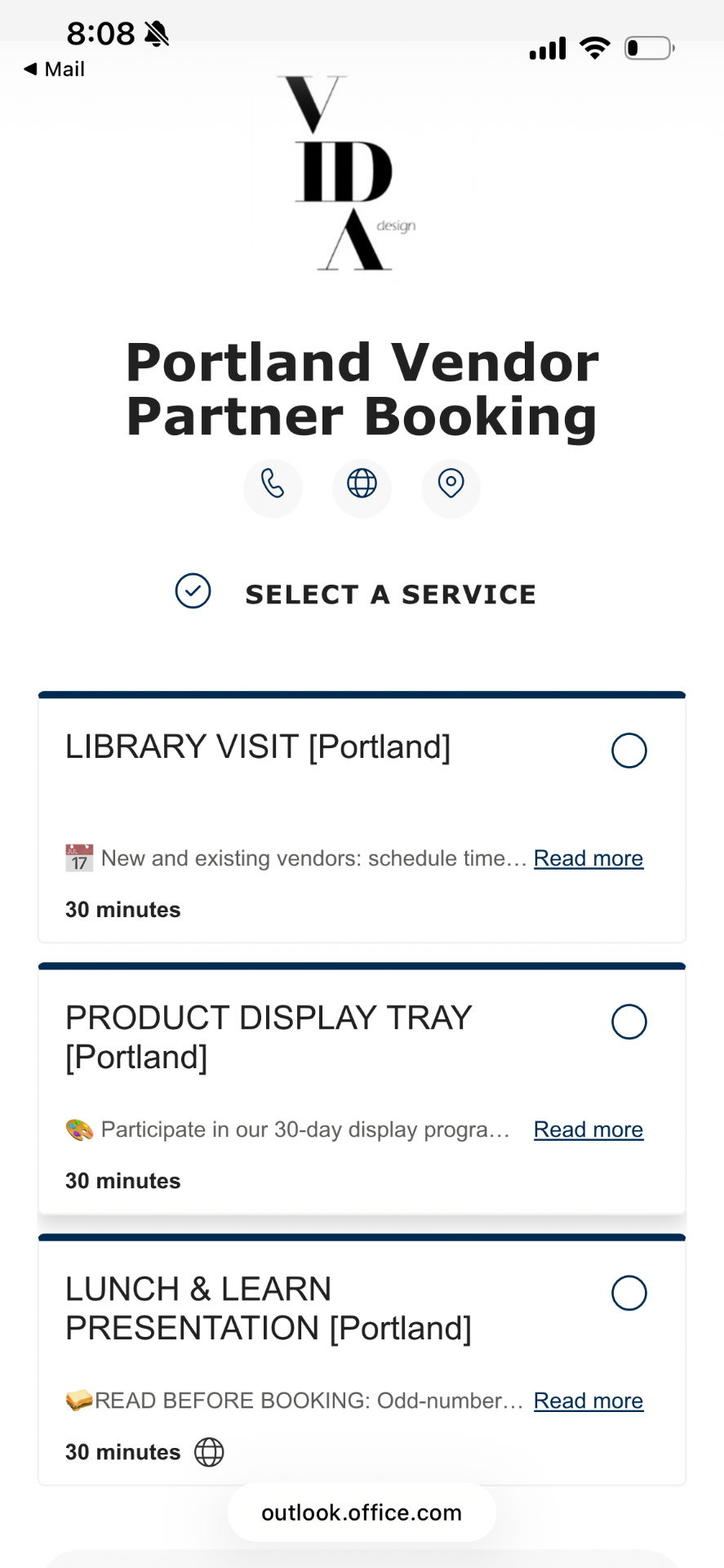
I created one centralized vendor booking system that gave vendor partners a self-service way to choose the type of interaction they needed. The booking system organized three recurring workflows:
Library visit
For new and existing vendors to schedule time to update materials and maintain their presence in the library.
Product display tray
For vendors participating in the rotating product-display program.
Lunch & learn presentation
For scheduled product presentations to the design team.
The system created a consistent entry point instead of managing each request separately through email.
Key decision
Centralize multiple vendor interactions into one self-service booking experience and automate routine scheduling communication.
Why it mattered
The system reduced repetitive scheduling coordination and allowed more of my time to stay focused on materials-library operations. It also created clearer expectations for vendors about how to engage with the library.
I designed and implemented this booking workflow using existing scheduling tools — workflow design, program coordination, service structure, automation setup and vendor communication design.
Visual
System 02
Product Display Program
Problem
Materials were present but not findable. Without a display logic, designers relied on memory and on asking whoever knew the shelves best.
System
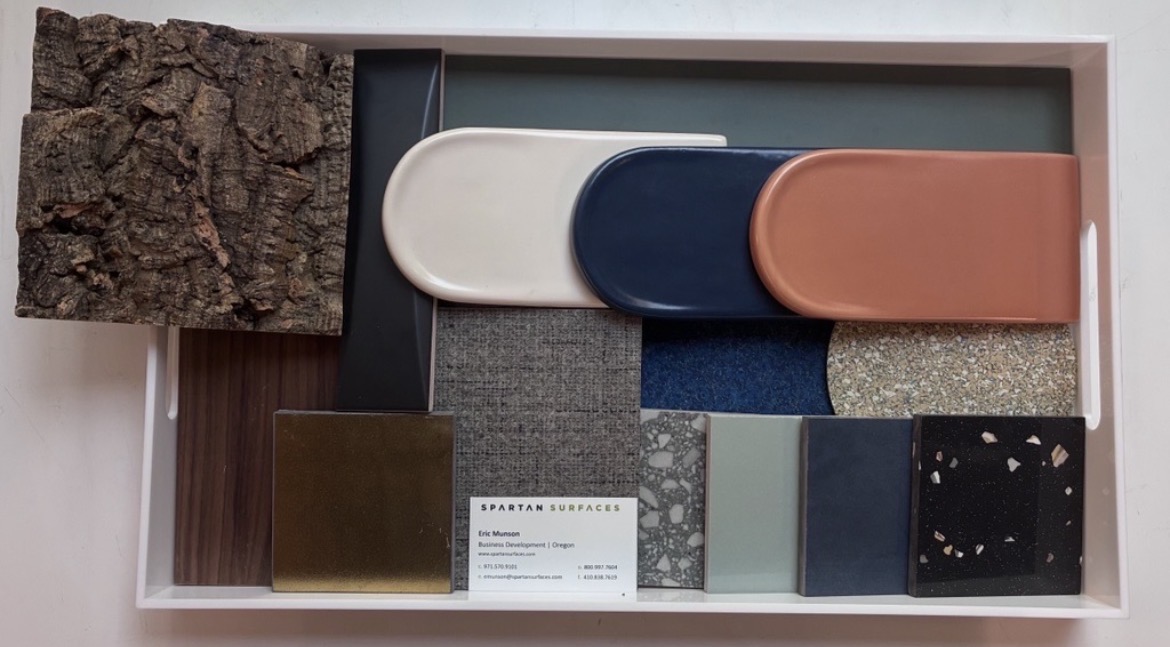
A selection standard for what earns shelf space, a curation pass that groups materials the way designers actually search, a display structure that carries that logic visually, and a refresh cycle that keeps it current.
Key decision
Display is organized around how designers search, not around vendor or catalog structure.
Why it mattered
Discovery becomes self-serve, so finding a material no longer depends on a specific person being available.
Visual

System 03
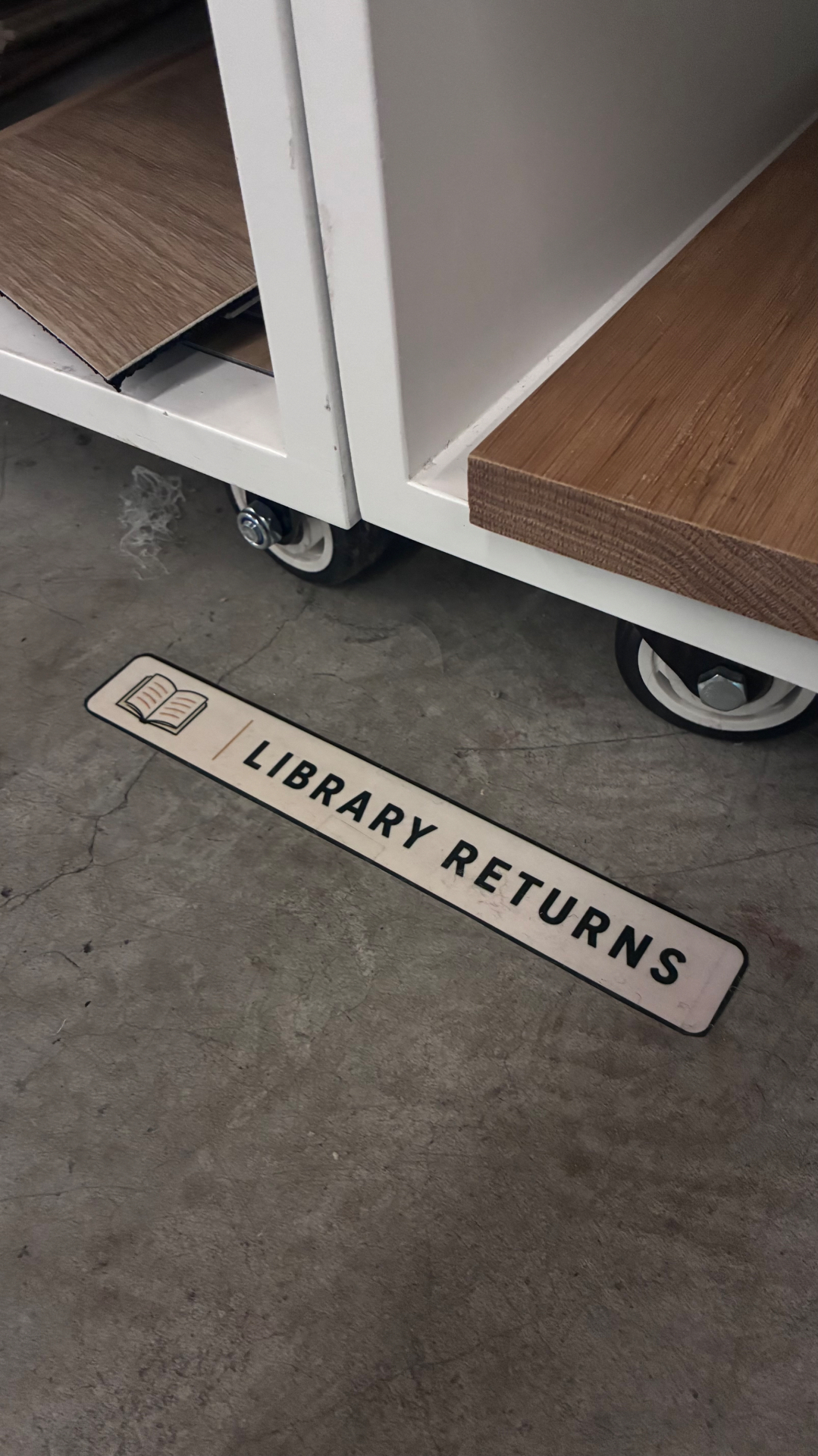
Sample Circulation and Returns
Problem
Samples left the library easily and came back inconsistently, so the shelves slowly drifted out of sync with what the library was supposed to hold.
System
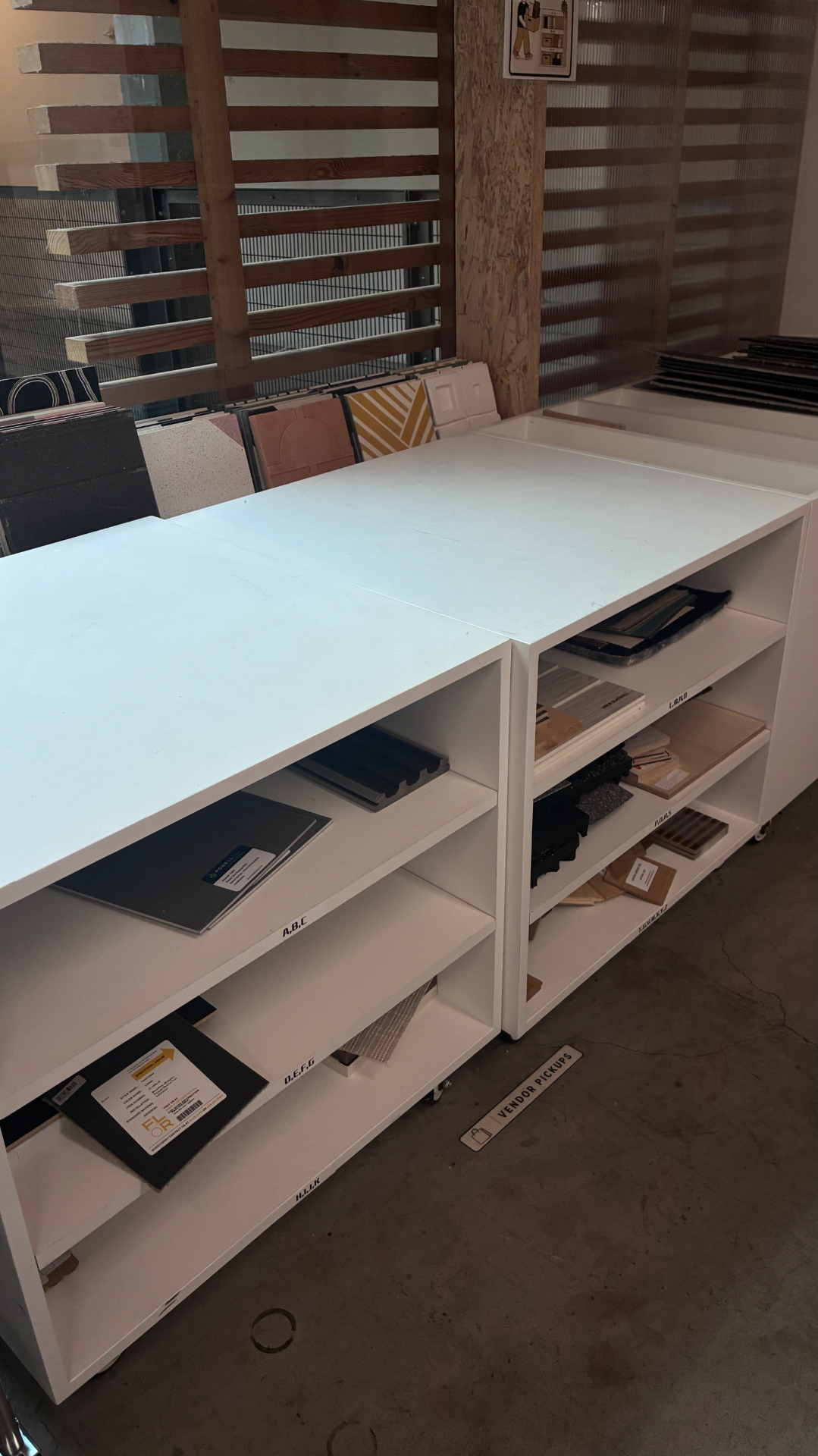
A capture point for what leaves and comes back, a sorting step at the return area, routing rules for reshelving, replacing or removing an item, and a defined return-to-shelf step.
Key decision
The return area is treated as a system of its own, with its own space and rules, rather than as a pile to process later.
Why it mattered
The library stays accurate over time, which is what makes the discovery system trustworthy.
Visual
One program. Three systems.
01
Vendor access
02
Product discovery
03
Sample circulation
My role
- Program design
- Stakeholder coordination
- Workflow design
- Vendor relationships
- Information management
- Change enablement
- Ongoing operations